

Rain Tanks & Rain Barrels
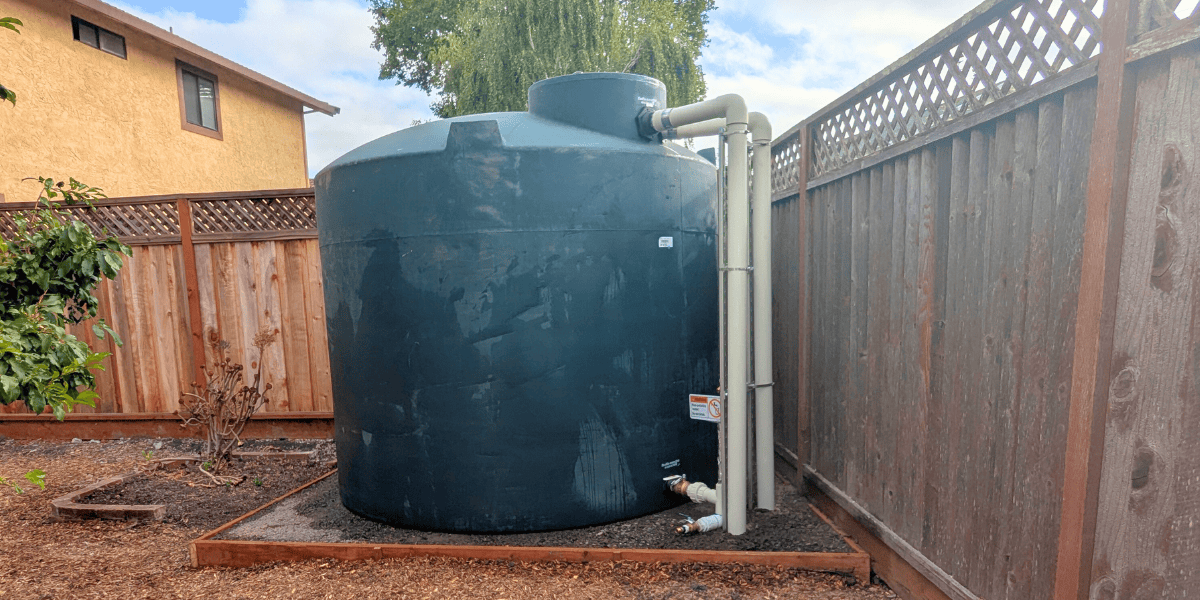
Collecting rain from the roof of your house is easy, practical and can provide long-term savings on your water bill. Rain catchment also reduces the amount of runoff that flows into creeks and storm drains, easing the burden on wastewater treatment plants and reducing the amount of pollutants washed into local streams and rivers.
With California’s seasonally wet climate, rainwater catchment can help stretch the wet season well into the summer months.
Types of Tanks and Barrels
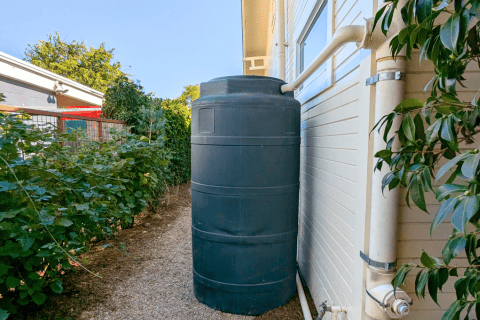
Rain tanks and barrels are available in a wide range of sizes and shapes. Some are designed to stand flat against the house, some are round and some are like giant bladders that can rest underneath a porch or in an old swimming pool. Rain can also be stored in tanks underground.Keep in mind that for tanks over 5,000 gallons you’ll need to get a permit before installing.
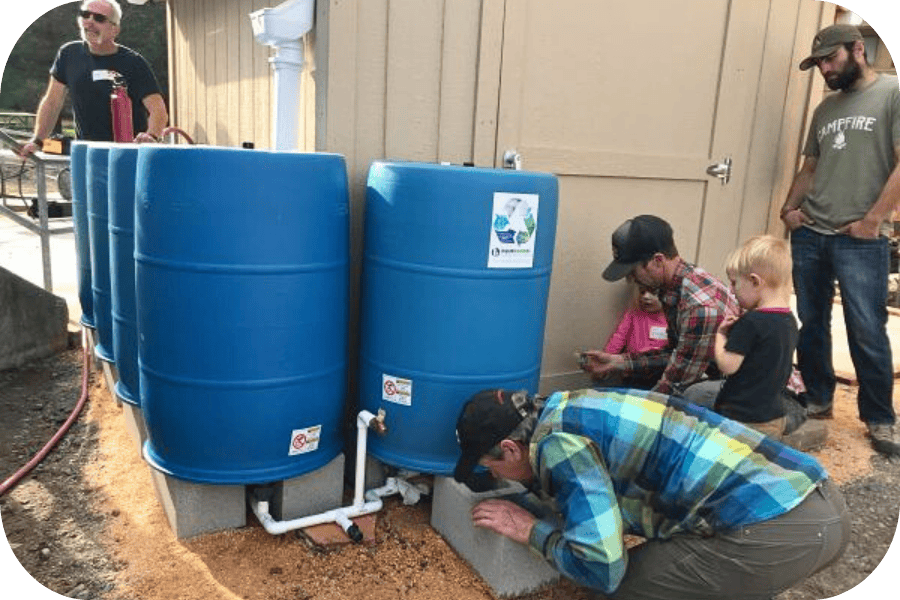
Although the prices are coming down, rain collection systems are still relatively expensive. For most systems, you can expect to pay about $1 per gallon of storage. Some systems are more expensive than this, but it is also possible to set up low cost systems using recycled food storage barrels.


Irrigating with Rainwater
The easiest way to irrigate with rainwater is to attach a hose to the rain tank or water by hand by filling up a watering can from the spigot. You can also attach a soaker hose if you have enough pressure (hint: drill larger holes in the soaker hose to reduce the need for a high pressure system). The higher uphill your tanks are from the area you want to water, the more pressure you’ll have.
Rainwater can be run through drip irrigation but you’ll need to install a pump to get the appropriate pressure. This set-up works better with a larger rain tank, rather than smaller barrels.
Overflow and Safety
An overflow pipe should be installed to direct excess water to a rain garden, a swale or to a storm drain if necessary. Rain tanks and barrels should be strapped to the house to keep them from falling over in the event of an earthquake.
Additional Resources and Readings
Rainwater Harvesting for Drylands and Beyond – Brad Lancaster