
Designing Landscapes that Protect Your Well
Daily Acts is excited to launch the Well-Designed Landscape Program, a new branch of our Land Resilience Partnership Program specifically for well-water users living in the Santa Rosa Plain Groundwater Basin.
This free program provides participants with a customized “Catalog of Projects” featuring actionable ideas to conserve groundwater, reduce strain on private wells, and cut long-term maintenance costs. With a list of project ideas in hand, participants can DIY or work with a contractor or landscape professional where needed to create outdoor spaces that save water and money while fostering a healthier, more climate-resilient community.
PROGRAM ELIGIBILITY
While we want everyone to save money, beautify their yard, and conserve water, this program currently has two eligibility criteria:
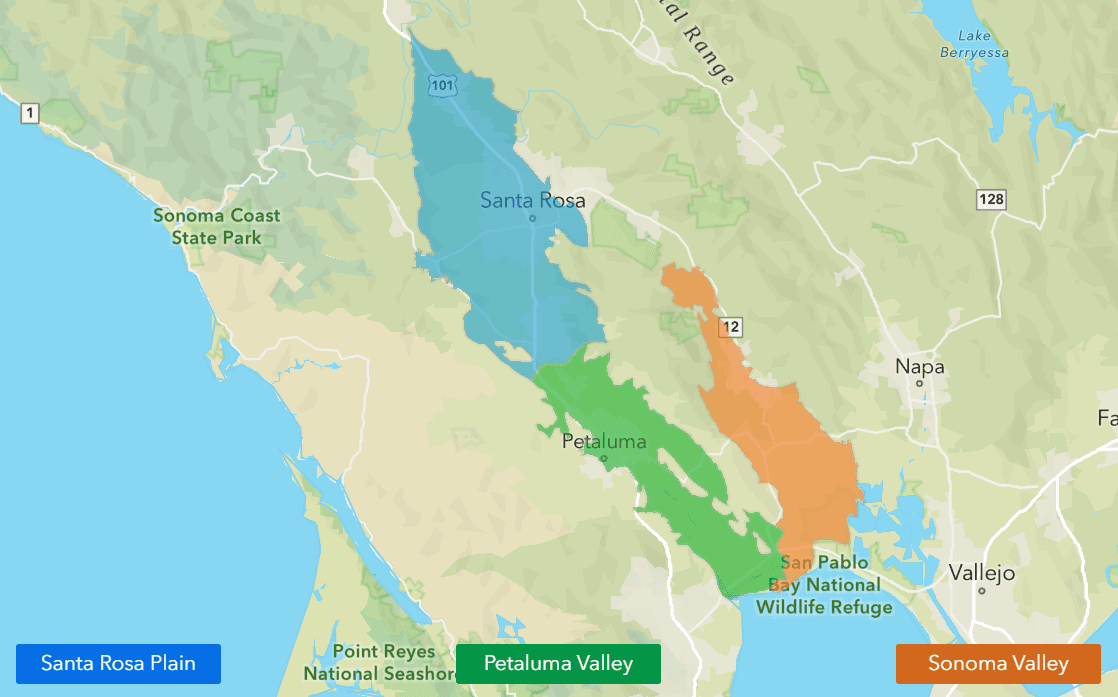
If you are a residential or non-agricultural well-water user and you live in the Santa Rosa Plain Groundwater Basin, then you are eligible to apply for a free Catalog of Projects! You can check to see if you live within the groundwater basin using this interactive map.
This program is no longer accepting applications. However, if this program interests you, then please apply to help us demonstrate interest for future funding opportunities.
CATALOG OF PROJECTS
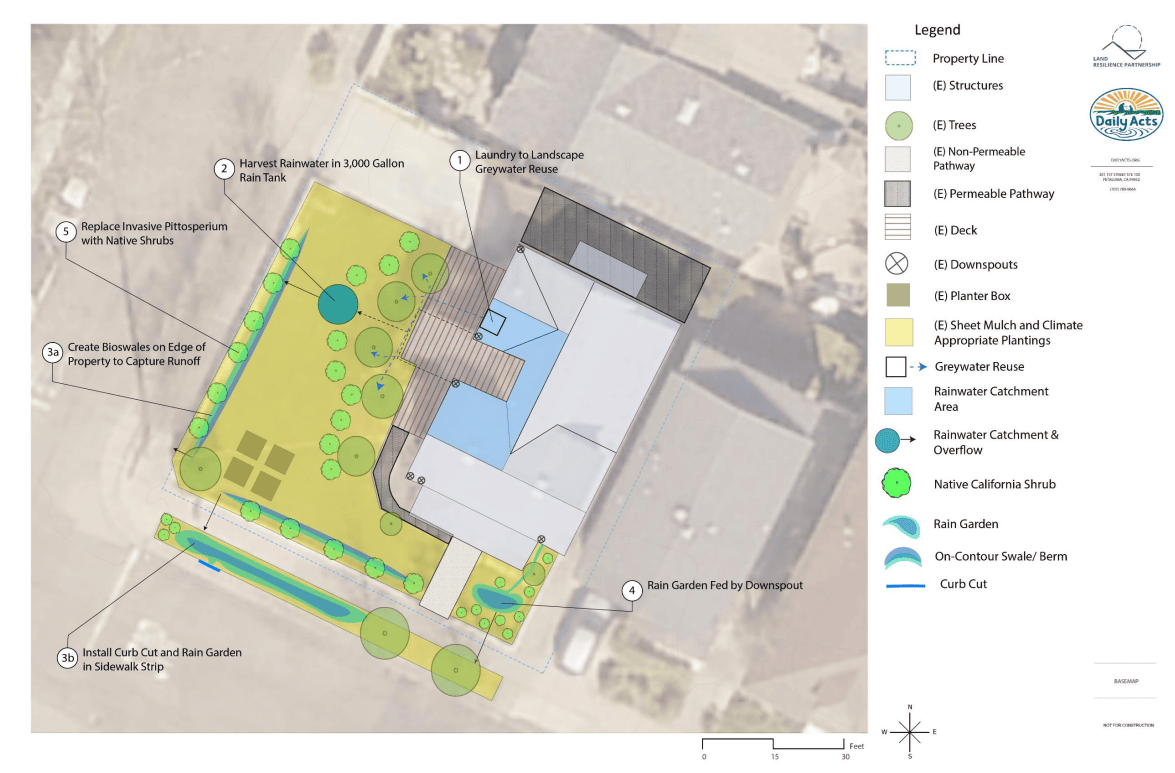
Following a site assessment, Daily Acts produces a Catalog of Projects: a concept level design that lists projects and priorities that can be implemented on site to save water, mitigate flooding, and build land resilience. This document provides project specific data that captures the water savings benefit associated with each project.
Recipients of a Catalog of Projects are provided with site-specific recommendations along with a referral list for trusted professionals that can determine how to best implement the ideas presented.
WELL AWARE TOOLKIT
We’re excited to announce the launch of the Well Aware Toolkit – a new, interactive resource from the Sonoma County Groundwater Sustainability Agencies (GSAs) designed to help you make smart, well-informed decisions about groundwater use on your property.
The Well Aware Toolkit allows you to enter your property address to be connected with:
- Custom water-saving strategies for your property
- Financial assistance programs to support conservation
- Guidance from trusted local experts who understand our region’s needs
Whether you’re a rural resident, small or large farm, vineyard, winery, or business, the Toolkit provides guidance tailored to your type of property. Simply enter your address to find your best path to personalized solutions.
Why should you use the Well Aware Toolkit?
Groundwater is a critical resource in Sonoma County, supporting families, farms, and ecosystems. About 43,000 people within the groundwater sustainability boundaries and many local jobs in Sonoma County solely rely on groundwater supplies. Preserving this resource is critical to the long-term health of our region.
The Well Aware Toolkit was created as part of the Well Aware Program, which connects well users with practical tools and resources to support groundwater management and sustainability. Water use efficiency is a key part of our plan to protect our basins and livelihoods. All of us being thoughtful about how we use water makes a difference.
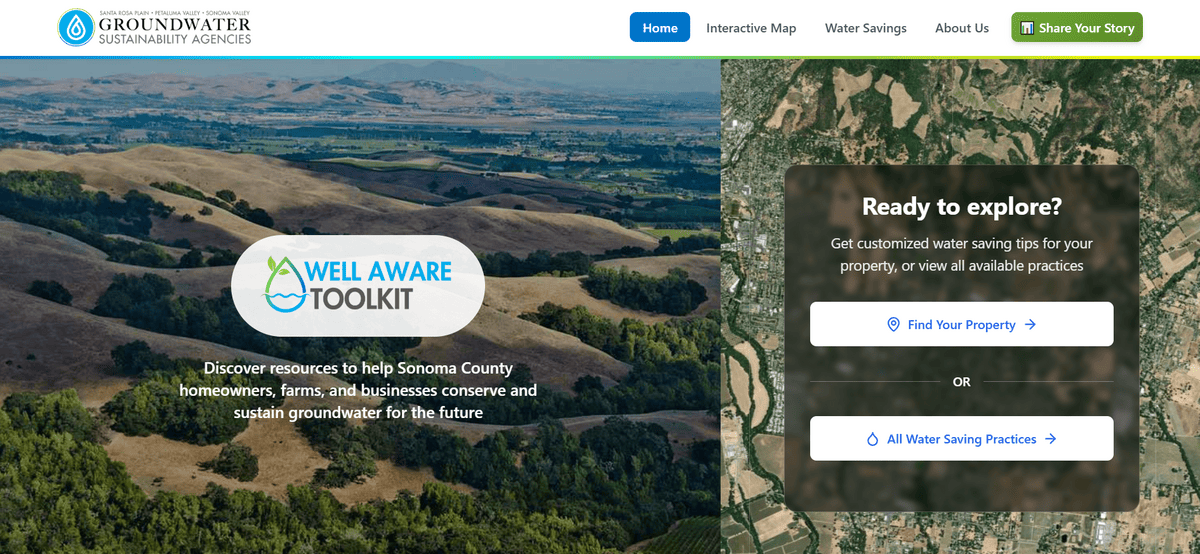
The Well Aware Toolkit is a one-stop-shop for all resources related to water use that will help users address leaks, choose proper equipment, and find rebate programs. These changes can help property owners save money, reduce water use, and provide inspiration on improvements that could increase property value.
Get started today!
Together, we live on Sonoma County’s groundwater and we need to build a sustainable future.
Click this link to access the Toolkit today:

Funding for this project has been provided in full or in part from The Budget Acts of 2021 and 2022 and through an agreement with the State Department of Water Resources.
BUILD CLIMATE & DROUGHT RESILIENCE WITH LOCAL ON-SITE TOOLS
Below, read through the types of projects you can expect to be included in the Catalog of Projects designed for your property:
Lawn Conversion
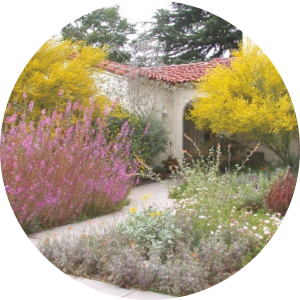
Lawn Conversion is the replacement of a monocrop landscape with low water-use or native plants. The shallow roots of turf grass compacts soils and limits water absorption when it rains. Runoff picks up any chemicals or fertilizers from your yard and transfers them to local streams. With the installation of native species or low water use plants, roots are given a chance to grow deeper and create systems that hold water in the soil and lessening runoff. Click here to read the Climate Appropriate Planting Guide and the Mulching Guide.
Irrigation Efficiency Upgrades
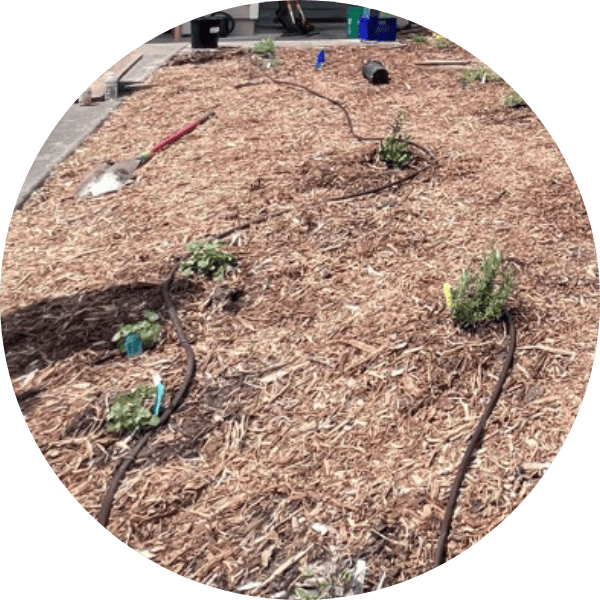
Irrigation efficiencies are strategies aimed at minimizing the loss of water due to evaporation leaks, and runoff. This may include upgrading irrigation timers to a more efficient water delivery that reduces consumptive use while maintaining the same amount of healthy and attractive landscape. By switching irrigation times on existing irrigation systems to morning or evening when temperatures are lower, less water is lost to evaporation.
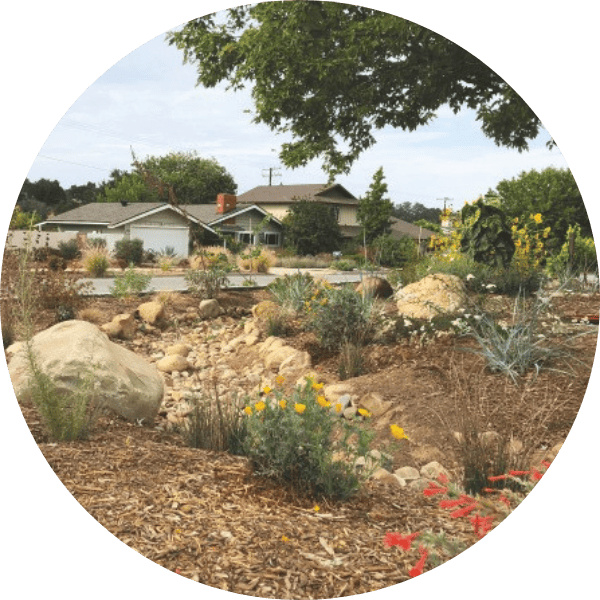
Rain Gardens & Stormwater Management
The addition of rain gardens and swales in your landscape offers two simple ways to increase stormwater capture and recharge our aquifers. These strategically designed low depressions and channels create holding places for water to collect and sink rather than run off over heavily saturated soils or impermeable surfaces. Click here to read the Rain Gardens Guide.
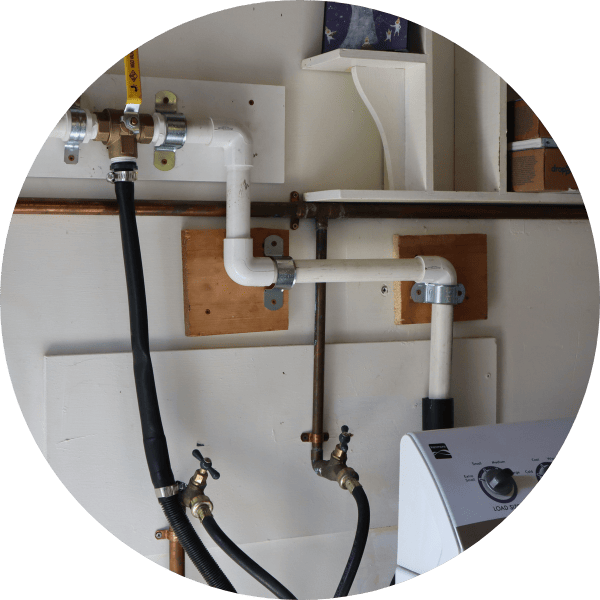
Laundry Greywater Reuse
Laundry greywater is gently used water from your washing machine. Instead of sending greywater to your septic system, it’s possible to utilize that water to irrigate your garden or landscape. While greywater may look “dirty” it’s a safe and even beneficial source of irrigation water in a yard. If greywater is directly released in rivers or streams its nutrients become pollutants, but for plants, they are valuable fertilizer. Pay for your water once and use it twice! Click here for Greywater Laundry-to-Landscape Resource Guide.

Increase Shade Canopy
Increasing shade canopy on any landscape means more than just planting trees, though that is the most impactful solution. It can often mean the implementation of a variety of plants that decrease the amount of sunlight exposure on the soil. This can result in lowering the temperature of the area and increased soil health. With more shade on the ground, water retention in the soil increases, resulting in homeowners having to irrigate less than before.
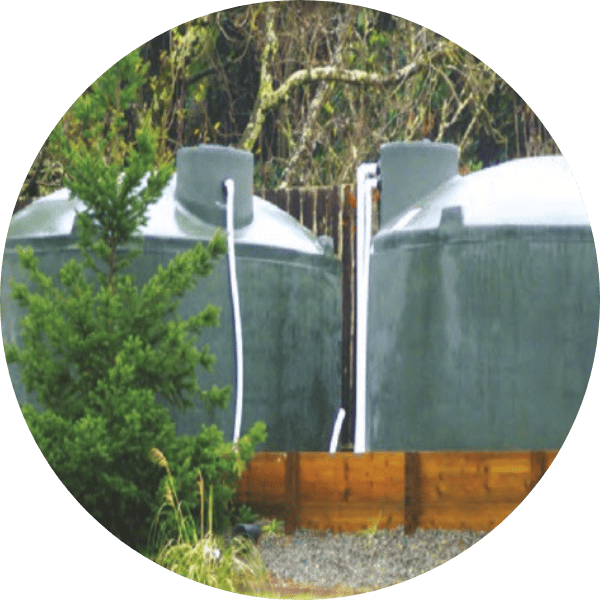
Rainwater Harvesting
Rainwater harvesting is the capturing and storage of rainwater that runs off hard surfaces such as roofs. Gravity pulls water down through the gutters into the storage rain tank. Overflow from the tank can be directed to rain gardens, where the water can infiltrate the soil and refill aquifers. This FREE water, that would have otherwise been lost due to run-off, can be stored and used to water gardens and landscapes long after the rainy season has passed. Click here for Rainwater Harvesting Guide.
OUR PARTNERS & SPONSORS