


CARBON SEQUESTRATION
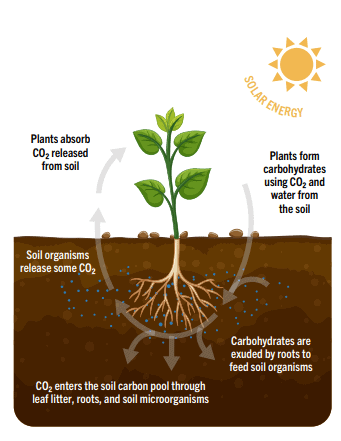
You may have learned about the carbon cycle in school, but if you want a quick refresher, check out this resource. Sequestration is the part of the cycle in which plants store carbon atoms in their biomass and in the ground. Sequestration is a big buzzword lately. That’s because it’s super important! Think of activities that emit carbon – like burning fossil fuels, deforestation, and land degradation – as a faucet filling a giant bathtub (the atmosphere of our planet). Imagine the tub is overflowing and the bathroom is flooding. This is not great for your house, to say the least! So what do you do? You turn the faucet off. But what about all the water (or, carbon) that’s left over in your house? Sequestration is the mop, or the shop vac, to safely remove all that excess.
HOW TO GROW CARBON AT HOME
- Compost – mix compost into your soil, and use as a top dressing to feed plants as needed
- Cover exposed soil with mulch or cover crops
- Plant natives – native species above ground play nicely with native soil organisms below. Go with local native plants to attract local pollinators and create habitat at the same time!
- Diversify your species – the more diverse things are above, the more diverse below!
- Plant perennials and cover crops to maximize continuous living roots – roots feed carbs to soil life, an essential step of the carbon cycle
- Minimize soil disturbances like tilling, which are harmful to soil ecology and thus release CO2
- Skip the synthetic fertilizers, pesticides and herbicides – these substances can harm microorganisms in the soil and emit climate disrupting gasses
- Know what you’re working with! Test your soil
Check out this super cool tool from our friends at Landscape Analytic Solutions, the Carbon Sequestration Calculator.